

7 Thimbleberry House Alternatives for Curated Home Decor
Last Updated: October 26, 2026
Quick Summary
A thimbleberry house alternative is a curated home decor shop with a clear point of view, honest materials, and stated shipping and returns. We compared seven types, from story-led collections and playful prints to ceramics studios and dried botanical ateliers, grouped by style rather than ranked.
- We compared shops on assortment character, material quality, price transparency, shipping and returns, and gifting suitability.
- A bold print dates faster than a ceramic, so buy pattern pieces for love rather than longevity.
- Buy textiles you can wash, and keep spot-clean-only pieces off the family sofa.
- Dried arrangements shed and fade in direct sun, so keep them away from south-facing windows.
- Dried botanicals and made-to-order ceramics are commonly excluded from returns, so confirm before ordering.
Table of Contents
- Why Shoppers Look for a Thimbleberry House Alternative
- How We Compared These Curated Home Decor Shops
-
7 Thimbleberry House Alternatives Worth Browsing
- 1. Our House of Grace: Story-Led Collections for Gifting and Gathering
- 2. Foxblossom: Playful Prints and Pattern-Forward Accents
- 3. Amber Marie and Company: Warm Neutrals and Layered Textiles
- 4. A Boutique Ceramics Studio: One-of-a-Kind Pottery and Ginger Jars
- 5. A Dried Botanical Atelier: Wreaths, Stems, and Everlasting Arrangements
- 6. A Cottage-Style Textile Shop: Pillows, Throws, and Cozy Layers
- 7. A Garden-Inspired Home Accessories Brand: Moss, Lichen, and Natural Texture
- Unique Home Decor Websites: What Separates Them From Big Retailers
- Home Decor Brands Similar to Anthropologie: Style Cues to Compare
- Thoughtful Home Decor and Gifts: Matching Pieces to People and Occasions
- Price, Shipping, and Returns: What to Check Before You Buy
- Shop by the Person You're Gifting at Our House of Grace
- Frequently Asked Questions
Why Shoppers Look for a Thimbleberry House Alternative
Shoppers searching for a Thimbleberry House alternative want a home that looks collected rather than catalogued, story-led collections, handmade textures, and pieces you won't see on every neighbour's console table.
Mass retailers win on price and returns, but their assortments repeat across millions of homes. Small curated shops offer character, yet availability, shipping, and return terms vary wildly.
At Our House of Grace, we built our collections around that gap: pieces chosen for warmth and meaning, not warehouse turnover.
How We Compared These Curated Home Decor Shops
We compared curated home decor shops on five criteria: assortment character, material quality, price transparency, shipping and returns, and gifting suitability. Shops are grouped by type rather than ranked, because a wreath atelier and a ceramics studio serve different rooms.
What separates a good curated shop from a frustrating one:
- Assortment character: does the shop have a point of view, or a random drop-ship catalogue?
- Material honesty: are materials named (ceramic, resin, linen, polyester) or hidden behind vague words?
- Price transparency: are prices visible without an account, and do they match the material quality?
The biggest mistake is judging a curated shop by its photography alone. A styled shot shows how a piece looks in a studio, not how it behaves on your mantel in February.
7 Thimbleberry House Alternatives Worth Browsing
The seven alternatives below cover the main styles shoppers look for: story-led collections, playful prints, warm neutrals, handmade ceramics, dried botanicals, cottage textiles, and garden-inspired texture.
1. Our House of Grace: Story-Led Collections for Gifting and Gathering
Our own shop sits first because the brief was personal from the start.
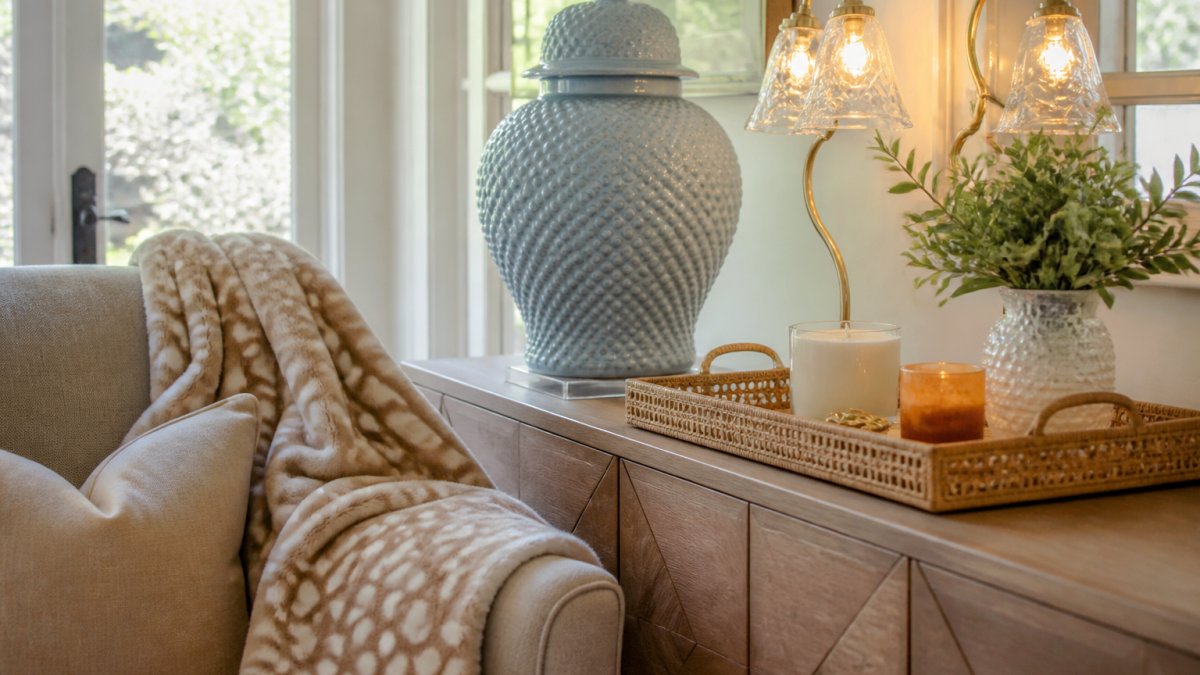
The assortment leans on texture and warmth rather than trend cycles. A large textured ceramic ginger jar anchors a mantel or holds fresh branches, paired with smaller ceramics for a layered look.
Best for: shoppers who want a gift with a story attached and decor that layers easily. Skip if: you need same-day delivery or a huge single-category catalogue.
2. Foxblossom: Playful Prints and Pattern-Forward Accents
Pattern-led shops suit rooms with a neutral base that need one confident accent: block prints, saturated florals, and small accessories that carry a room's personality.
The trade-off is commitment. A bold print dates faster than a ceramic, so buy it for love rather than longevity.
Best for: renters and first-apartment decorators who want instant character. Skip if: your home is already busy with pattern and colour.
3. Amber Marie and Company: Warm Neutrals and Layered Textiles
Warm-neutral shops trade on texture instead of colour: oatmeal linens, clay tones, woven trays, and layered throws, what most shoppers mean when they say a room feels calm.
What most guides miss is that neutral palettes need contrast to avoid looking flat. Add one darker wood tone or a metallic finish, such as a gold-based lamp, to give the eye somewhere to land.
Best for: building a long-term, season-proof base layer. Skip if: you want statement colour in every room.
4. A Boutique Ceramics Studio: One-of-a-Kind Pottery and Ginger Jars
Ceramics studios sell the pieces that anchor a shelf: ginger jars, vases, bowls with visible glaze variation. Because each piece is finished by hand, small differences in tone and texture are normal and part of the value.
Check the listing for whether a piece is decorative or food-safe before using it for serving.
Best for: collectors who want a focal piece no neighbour owns. Skip if: you need a matched set of identical pieces.
5. A Dried Botanical Atelier: Wreaths, Stems, and Everlasting Arrangements
Dried flowers, pampas grass, dried wheat, and preserved stems solve a specific problem: greenery that survives past a fortnight. A dried wreath or a bundle of stems in a ceramic jar gives botanical decor with no watering schedule.
Dried arrangements shed and fade in direct sun, so keep them away from south-facing windows and dust gently.
Best for: low-maintenance styling and seasonal swaps. Skip if: you want living plants or strong fragrance.
6. A Cottage-Style Textile Shop: Pillows, Throws, and Cozy Layers
Cottage and farmhouse textile shops sell the fastest way to change a room: pillows and throws. A new cushion cover costs far less than a sofa and shifts the whole mood.
The practical rule: buy textiles you can wash. Anything that says spot clean only should stay off the family sofa.
Best for: seasonal refreshes and cozy interiors on a budget. Skip if: you need pet-proof, heavy-duty fabrics.
7. A Garden-Inspired Home Accessories Brand: Moss, Lichen, and Natural Texture
Garden-inspired brands bring the outside in through moss, lichen, twigs, and stoneware. These pieces suit console styling and shelf vignettes where you want organic texture without houseplants.
Preserved moss needs no light or water, but it does need dusting and should stay out of damp bathrooms where it can spoil.
Best for: plant lovers who travel or forget to water. Skip if: you want a true living plant.
Light Blue Textured Ginger Jar - Large →
Unique Home Decor Websites: What Separates Them From Big Retailers
Unique home decor websites differ from big retailers in three measurable ways: assortment depth, editorial voice, and how honestly they describe materials. A curated shop carries fewer items per category but explains each one in detail.
That detail matters when buying blind. A retailer that names the material, dimensions, and care instructions is telling you how the piece will age.
For styling inspiration before you buy, 7 tips for styling a cozy living room in 2026 walks through layering a room from the base up.
Big retailers win on returns logistics and delivery speed. Curated shops win on character and on the odds that your piece stays unusual.
Home Decor Brands Similar to Anthropologie: Style Cues to Compare
Home decor brands similar to Anthropologie share recognizable style cues: layered textiles, botanical motifs, vintage-inspired ceramics, warm muted palettes, and a nostalgic, collected-over-time warmth. But "similar vibe" is not enough to shop by.
Here is a side-by-side framework you can apply to any curated shop, including Thimbleberry House and the alternatives above, comparing them on the dimensions that decide whether a purchase works in your home.
| Comparison dimension | What to look for | Why it matters |
|---|---|---|
| Style signature | Layered warm neutrals, botanical motifs, vintage-inspired ceramics, or playful prints | Determines whether a piece layers with what you already own or sits alone |
| Product range | Fewer items per category but deeper storytelling vs. broad catalogue | Narrow ranges mean easier styling but fewer one-stop options |
| Price level | Visible prices that track material (ceramic vs. resin, linen vs. polyester) | Prevents paying handmade prices for mass-produced materials |
| Shipping | Stated dispatch window, not just a delivery estimate | Decides whether a gift arrives before the occasion |
| Returns | Window length, who pays postage, exclusions for made-to-order and dried botanicals | Protects you on fragile or seasonal items |
| Material honesty | Named materials, dimensions, and care instructions on the product page | Predicts how the piece ages and whether it suits pets or high-traffic rooms |
Apply the framework with three concrete checks:
- Texture mix. Does the assortment combine finishes (ceramic, woven cane, linen, glass), or repeat one finish across the catalogue? A shop that mixes textures styles easily alongside pieces you already own; one that repeats a single finish looks like a single purchase sitting in a room.
- Colour temperature. Are the colours warm and muted (oatmeal, clay, fawn, soft blue) or cold and saturated? Warm muted palettes are the Anthropologie-adjacent signature and are more forgiving to layer season to season.
- Collection logic. Are pieces organised by story, room, or recipient, or dropped into a flat category list? Story-led collections, the pattern Thimbleberry House and Our House of Grace both use, make gifting and layering easier because the shop has already done the pairing work.
A shop that hits all three will style easily alongside pieces you already own; one that hits only one will look like a single purchase sitting in a room. Compare at least two shops on the same dimensions rather than judging by photography alone.
Thoughtful Home Decor and Gifts: Matching Pieces to People and Occasions
Thoughtful home decor and gifts work when the piece matches the recipient's routine, not the giver's taste. A candle lover needs a tray to group them.
For occasion-led shopping, unique gift baskets for special occasions gives seven ready-to-build ideas that pair decor with consumables.
Match by person first:
- The host: a serving tray that doubles as decor, used and displayed.
- The cozy homebody: a soft throw in a neutral that matches their sofa.
- The new homeowner: lighting, because lamps in pairs finish a room.
If you're shopping for a decor lover's birthday, the best gifts for home decor lovers narrows the field further.
Price, Shipping, and Returns: What to Check Before You Buy
Price, shipping, and returns decide whether a curated shop is worth the premium. Most top-ranking guides mention "affordable" or "reasonable prices" and stop there, not enough to shop by. Below is the practical guidance the roundups skip: how price tracks material, what shipping and return terms to expect, and the exclusions that catch shoppers out.
Price: compare against material, not against a marketplace listing
A resin tray and a ceramic jar are not competing on the same terms. Compare price per material and finish, not price per item. In curated decor, small accessories sit at the low end, mid-size ceramics and lamps in the middle, and large ginger jars, statement vases, and textile sets at the top. Within Our House of Grace, the tan cane rectangular tray is resin at 42.00, while the large textured ginger jar is ceramic at 51.45, the difference reflects material and finish, not markup.
Use these rules of thumb when comparing shops:
- Ceramic and stoneware should cost more than resin and polyresin for a similar size, because the material and firing process are more expensive.
- Linen and cotton should cost more than polyester blends; if a "linen-look" throw is priced like real linen, check the fibre content.
- Hand-finished ceramics carry small tone and glaze variations; that variation is part of the value, not a defect.
Shipping: look for a dispatch window, not just a delivery estimate
The most useful field on a product page is the dispatch window, how many business days before the item leaves the warehouse. A "3-5 days" delivery estimate without a dispatch window can mean anything from same-week to three weeks out. If you are hosting in two weeks, that distinction decides whether the gift arrives in time.
A common pattern:
- Big-box retailers usually state delivery estimates and offer expedited options, but selection is broad and less curated.
- Curated shops often dispatch in a few business days but may not offer expedited shipping; check before you rely on one for a last-minute gift.
- Made-to-order and handmade ceramics can take longer because pieces are finished after ordering; the listing should state the lead time.
Returns: confirm the window, who pays postage, and the exclusions
Returns are where curated shops differ most from big retailers. Before checkout, confirm the return window length, who pays return postage, and which items are excluded. Many curated shops exclude made-to-order pieces and dried botanicals, so read the exclusions before ordering a wreath or personalised piece.
A practical checklist before you buy:
- Is the return window stated in days from delivery, and is it long enough to inspect the piece in your own room?
- Who pays return postage, you or the shop?
- Are ceramics, dried botanicals, and made-to-order items excluded?
- Is the item gift-wrapped or shipped ready to give, and does that affect returns?
To see a specific piece in detail, browse the light blue textured ginger jar or the pink faux fur velvet throw and read the full specifications on each listing. Compare those against the checklist above before you commit, and you will avoid the most common curated-shop purchase mistakes.


Shop by the Person You're Gifting at Our House of Grace
Choosing decor for someone else is hard because taste is personal.
Our collections are named for loved ones and built around exactly those moments, from hostess gifts to milestone birthdays.
Three features make this easier: collections organised by person and occasion, pieces designed to layer with what someone already owns, and gifts that arrive ready to give.
Get started with Our House of Grace and find a piece that makes someone's everyday moment warmer.
Frequently Asked Questions
What should I look for in a Thimbleberry House alternative for home decor?
Start with materials and construction: ceramic, resin, glass, and natural fibers tend to hold up better than thin plastics. Check whether the shop names its makers or designers, since that signals a curated eye rather than drop-shipped stock. Look at the return window and shipping timeline before you commit, especially for gifts. Finally, compare the style vocabulary, whether it leans cottage, farmhouse, vintage, or garden-inspired, so the pieces you buy actually layer with what you already own.
Which curated home decor shops are best for hostess gifts?
Shops that organize by occasion or recipient make hostess gifting simpler. Our House of Grace builds collections around people and milestones, so you can shop by the person you're gifting rather than scrolling a generic category. A textured ginger jar at $51.45 or a tan cane rectangular tray at $42.00 works for a dinner party, while a faux fur velvet throw at $120.53 suits a closer friend. Confirm shipping lead time if the event is within two weeks.
How do unique home decor websites differ from big-box retailers?
Unique home decor websites tend to carry smaller runs, story-driven collections, and pieces you won't see in every neighbor's living room. Big-box stores win on volume and easy returns, but the assortment is often identical across regions. Independent shops usually publish more detail about materials and design intent, which helps you judge quality before buying. The trade-off is narrower stock, so order early if you need a specific piece for a dated event.
Are there home decor brands similar to Anthropologie that cost less?
Yes. Several independent shops echo Anthropologie's cottage, vintage, and garden-inspired styling without the flagship markup. Expect to pay $40 to $60 for ceramic accents and trays, and $60 to $130 for throws at curated boutiques. Compare material specs rather than photos alone: Oeko-Tex certification on textiles, kiln-fired ceramics, and weighted resin trays are the details that separate a durable piece from a decorative one that disappoints after a season.
How can I choose thoughtful home decor and gifts that feel personal?
Match the piece to a moment the recipient will recognize. A pair of curved gold glass table lamps at $435.00 suits a wedding or new-home gift, while a fawn-spot throw at $59.00 fits a teen's first apartment. Note the recipient's existing palette, neutral, blush, or blue, and pick one accent that bridges it. Including a short handwritten note about why you chose the piece turns a nice object into a keepsake they keep on display.
